Explore Reduced Bend 90 Degree Black Steel Threaded Malleable Iron Fittings with Direct Product Links
- Frontier MEPF

- Jul 23
- 12 min read
A pipe run can look simple on paper until it reaches a tight corner, drops into a branch line, or needs to change direction without wasting space. That is where a reduced bend earns its place. A Reduced Bend 90 Degree Black Steel Threaded Malleable Iron fitting helps a pipeline turn at a right angle while also stepping down to a smaller pipe size.
This small fitting solves two common problems at once: direction change and size reduction. It can reduce the number of joints in a line, help save space, and make installations neater when used correctly.
Black malleable iron threaded fittings are common in many industrial, mechanical, and building services installations across Nigeria and beyond. They are used where strength, threaded connection, and practical site installation matter. A 90 degree reduced bend is especially useful when a line needs to move around a corner and connect to a smaller section of pipe.
This guide explains what the fitting does, where it fits best, what to check before buying, and how to explore related items through direct product links.
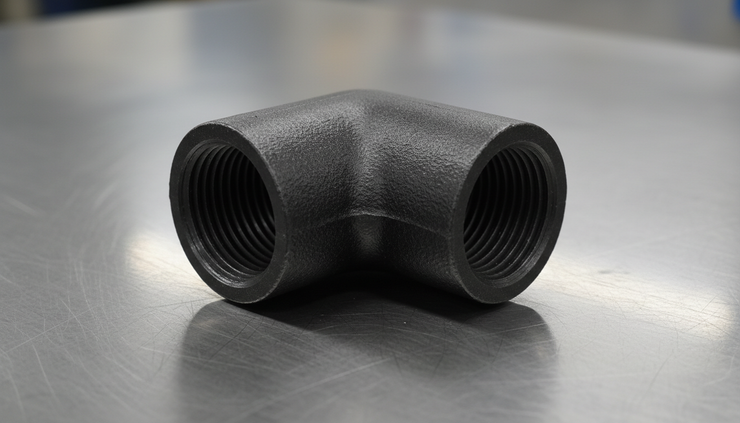
What a reduced bend 90 degree black steel threaded malleable iron fitting does
A reduced bend is a pipe fitting with two key features.
It bends the pipe run by 90 degrees.
It also connects two pipe sizes, with one end larger than the other.
That means it works as both an elbow and a reducer. Instead of installing a regular 90 degree elbow and then adding a reducing socket or bushing, the reduced bend handles both tasks in one fitting.
In practical terms, this can help when:
A main line needs to branch or turn into a smaller pipe
Space is too tight for multiple fittings
A neater installation is needed around corners
The installer wants fewer threaded joints
The layout calls for a direct pipe size transition at a bend
The term black steel threaded usually refers to the black finish and threaded connection style commonly used with steel pipe systems. The fitting itself is often described as malleable iron because malleable iron has good strength and toughness for threaded fittings.
Why the 90 degree angle matters
A 90 degree fitting turns the line sharply. It is one of the most common fittings in pipework because buildings, machinery layouts, and service areas rarely allow pipes to run in one straight line from start to finish.
A 90 degree bend can help route pipework:
Around beams or walls
Into equipment connection points
Down from overhead pipe runs
Across corners in plant rooms
Into branch lines and terminal points
When the bend is also reduced, it becomes even more useful. The line can change direction and size at the same point.
Why the reduced design matters
A reducer changes from a larger pipe size to a smaller one. This is important when the flow demand drops, the connected equipment has a smaller inlet, or the pipe design calls for a smaller outlet after a branch.
A reduced 90 degree bend can cut down the number of separate fittings in the run. Fewer fittings can mean:
Fewer threaded joints to seal
Less installation time
A more compact pipe layout
Lower chance of alignment issues
Less material clutter in tight spaces
That does not mean it suits every job. The fitting size, thread type, pressure rating, medium, and installation environment must all match the system requirements.
Understanding the material and finish
Black malleable iron fittings are popular because they combine strength with practical installation. They are not delicate components. They are made for pipework that needs reliable mechanical connection and a durable body.
Malleable iron gives strength with some toughness
Malleable iron starts as cast iron and goes through heat treatment to improve its toughness. This makes it more suitable for threaded pipe fittings than ordinary brittle cast iron.
In real site conditions, fittings face handling, tightening, vibration, and changes in load. Malleable iron performs well in many of these conditions when it is selected and installed correctly.
Common reasons installers choose malleable iron fittings include:
Good mechanical strength
Suitability for threaded pipework
Availability in many sizes
Compatibility with common steel pipe systems
Practical use in maintenance and repairs
The black finish is practical, not decorative
The black finish on the fitting is not mainly for appearance. It is associated with black iron and black steel pipework systems. These systems are commonly found in mechanical and industrial installations.
The finish may offer some basic surface protection, but it should not be treated as a full corrosion protection system. In damp, exposed, coastal, underground, or chemically aggressive environments, extra protection may be needed.
That can include:
Correct external coating
Suitable wrapping
Paint system approved for the site
Galvanised or alternative material where required
Regular inspection and maintenance
For drinking water or food-grade use, always confirm material suitability with the project specification and local requirements. A fitting that works well in one service may not be approved for another.
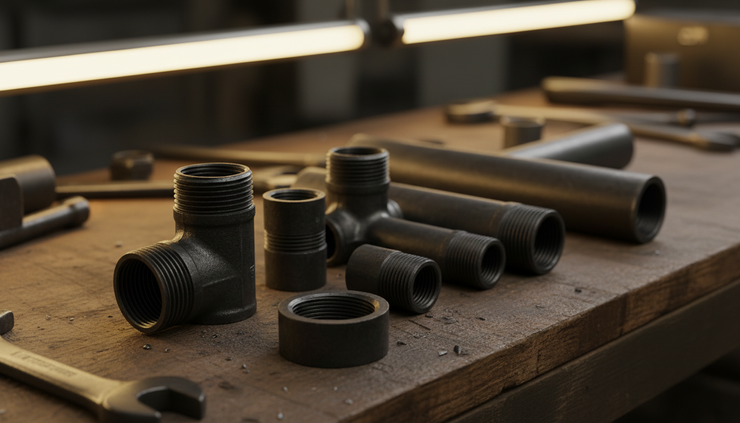
Where reduced 90 degree threaded bends are commonly used
A reduced 90 degree bend is a practical fitting for pipework that must turn and reduce in size at the same connection point. It can appear in many types of installations, depending on the material approval and service requirement.
Mechanical pipework
In mechanical installations, pipes often need to move around walls, columns, equipment bases, and ceiling services. A reduced bend helps keep the pipe route clean when a smaller line continues from a larger line at a corner.
Examples include:
Equipment connection points
Pump room pipe layouts
Utility pipe runs
Service risers
Maintenance bypass lines
The reduced bend can help avoid a bulky combination of elbow plus reducer, especially where working space is limited.
Industrial maintenance and repairs
Maintenance teams often work with existing pipework rather than new layouts. The available space may already be crowded with supports, valves, instruments, and nearby services.
A reduced 90 degree bend can make repair work easier when a damaged section needs replacement and the new run must connect to a smaller pipe at a right angle.
It can also help when modifying an older line to suit new equipment with a different connection size.
Gas and fuel-related pipework
Black threaded fittings are often associated with gas and fuel pipework in many markets. Even so, gas and fuel installations require strict compliance. The fitting must match the approved standard, thread form, pressure class, sealing method, and local regulations.
For gas-related work, use qualified technicians and approved materials only. Do not rely on appearance alone. Two fittings can look similar but differ in rating, certification, thread type, or permitted service.
Fire protection and utility services
Some black malleable iron fittings are used in fire protection or utility pipework, depending on the specification. In these systems, using the wrong component can create serious risk.
Always check:
Approved material list
Pressure rating
Thread standard
System medium
Inspection and testing requirements
Applicable codes and project documents
A fitting should never be chosen only because it physically screws onto the pipe.
How to choose the right reduced bend
The right fitting is not only the one that looks correct. It must match the full technical need of the pipe system.
Before buying, check the details below.
Confirm both pipe sizes
A reduced bend has two different connection sizes. Both matter.
For example, a line may reduce from a larger nominal bore to a smaller one at the bend. If either side is wrong, the fitting will not work without extra adaptors, and that defeats the purpose of using a reduced bend.
When reviewing product options, check:
Larger end size
Smaller end size
Nominal pipe size
Thread size
Whether the reduction direction matches your layout
It helps to sketch the pipe route before ordering. Mark the flow direction, the turn, and the size change. This reduces mistakes during purchase and installation.
Check the thread type
Threaded fittings must match the pipe thread. A fitting may look close to the right size and still fail to seal if the thread type is wrong.
Common thread forms include tapered and parallel types. In many markets, BSP threads are common, but never assume. Confirm what the product page states and compare it with the pipe, valve, or equipment connection.
Also check whether the thread is internal or external. A reduced bend will usually have female threaded ends, but product designs can vary.
Match the pressure and temperature requirements
Every pipe system has working conditions. These include pressure, temperature, and the type of fluid or gas in the line.
Before selecting a fitting, confirm that it suits:
Normal working pressure
Test pressure
Operating temperature
Possible pressure surges
Medium flowing through the pipe
Indoor or outdoor exposure
If the product page lists a standard or class, compare it with the project document. If the system is safety-critical, get confirmation from the supplier or project engineer before installation.
Consider the medium in the pipe
Not every black malleable iron fitting suits every medium. The fitting may be suitable for some services and unsuitable for others.
Confirm compatibility for liquids, gases, oils, compressed air, steam, or other services before use. For potable water, corrosive liquids, chemical lines, and high-temperature work, product approval matters.
When in doubt, ask for the fitting’s data sheet or product specification before purchase.
Think about corrosion and installation environment
Nigeria’s climate can be harsh on exposed metal. Humidity, rain, coastal air, poor drainage, and industrial fumes can all affect pipework over time.
For indoor dry areas, black malleable iron may be acceptable where specified. For exposed or damp areas, extra protection may be needed.
A few practical checks help:
Will the fitting be outdoors?
Will it touch wet walls, soil, or concrete?
Is the area close to the coast?
Will condensation form on the pipe?
Is painting or wrapping required after installation?
Good installation includes protection after assembly, not only correct fitting selection.
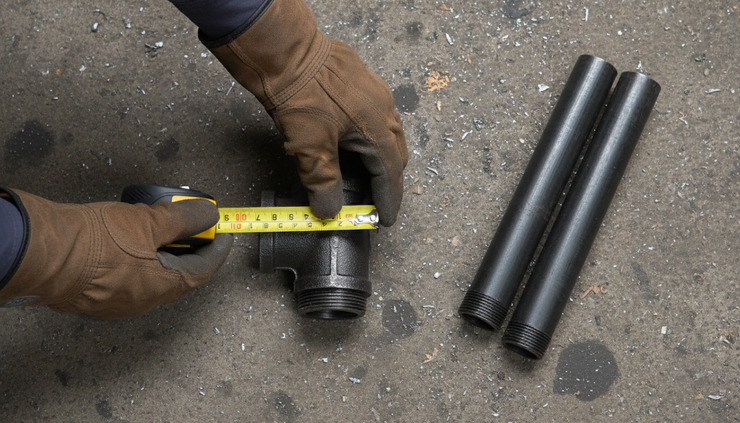
Direct product links to explore reduced bend and related fittings
Use the links below to explore reduced bend 90 degree black steel threaded malleable iron fittings and related threaded items. Check the product page for available sizes, thread details, stock status, and technical specifications before placing an order.
If the installation needs several fittings, compare the full pipe route before buying. A reduced bend may solve one part of the layout, but the line may also need sockets, nipples, unions, tees, plugs, caps, or valves.
Related fittings that often work with reduced bends
A reduced bend is rarely used alone. It usually forms part of a full threaded pipe assembly.
Related items may include:
Threaded sockets
Used to join two male-threaded pipe ends in a straight line.
Hex nipples
Used to connect two female-threaded fittings or equipment ports.
Unions
Useful where a pipe run may need future disassembly for maintenance.
Reducers and bushings
Used when the size change happens away from the bend.
Equal and reducing tees
Used for branch connections from a main line.
Threaded plugs and caps
Used to close off unused outlets or terminate a line.
90 degree elbows
Used when the line needs to turn without changing pipe size.
Choosing the right combination can reduce site delays. It also helps the installer avoid forcing pipe alignment, which can stress threads and fittings.
Good installation practices for threaded reduced bends
Threaded fittings are simple in concept, but poor installation can cause leaks, damaged threads, and difficult maintenance. A clean, careful installation is worth the time.
Inspect the fitting before use
Check the fitting before it enters the line. Look for visible cracks, damaged threads, blocked openings, heavy rust, or poor casting defects.
Do not install a fitting that looks damaged. A small visible defect can become a leak point under pressure.
Also check that the reduced ends match the planned pipe sizes. Many mistakes happen because fittings with similar shapes are picked from the wrong bin.
Clean the threads
Dirt, metal shavings, paint, old sealant, or rust can stop threads from sealing correctly.
Before assembly:
Wipe the threads clean
Remove loose particles
Check for crossed or flattened threads
Ensure the pipe end is clean and properly threaded
Avoid forcing a fitting that does not start smoothly
If the threads bind early, stop and check alignment. Forcing the connection can damage both the pipe and the fitting.
Use the correct sealant
Threaded pipe joints usually need a suitable sealant. The right choice depends on the system medium, temperature, pressure, and project specification.
Common options include thread sealing tape and pipe joint compound. The sealant must be suitable for the service. For gas, fuel, oil, steam, or chemical systems, use only sealants approved for that application.
Apply sealant neatly. Too much sealant can break loose inside the pipe and cause problems downstream, especially near valves, regulators, strainers, and small equipment ports.
Tighten with the right tools
Use pipe wrenches or suitable spanners that grip properly. Support the pipe while tightening so the force does not twist nearby fittings or equipment.
Avoid using excessive force. Over-tightening can crack fittings, strip threads, or create stress in the pipe run. Under-tightening can leak.
The goal is a firm, aligned, sealed joint, not the maximum force possible.
Keep the pipe aligned
Threaded joints do not like being forced into position. If the pipe route is misaligned, the fitting may carry bending stress after installation.
Good alignment helps:
Protect threads
Reduce leak risk
Improve appearance
Make future maintenance easier
Prevent strain on nearby valves and equipment
If the reduced bend does not line up properly, review the pipe length, support positions, or fitting combination.
Test the assembly
After installation, the system should be tested according to the project requirement and service type. Testing may involve pressure testing, leak checks, or inspection under controlled conditions.
Do not skip this step. A dry-looking joint during installation can leak when pressure, temperature, or vibration changes.
For safety-related systems, testing should be done by qualified personnel using approved methods.
Buying tips for Nigerian projects and nationwide supply
For nationwide projects, buying pipe fittings is often about more than the fitting itself. Delivery timing, size availability, and clear specifications can affect the whole job.
Check size availability before planning the job
Reduced fittings can be less common than equal-size elbows. If a project depends on a specific size combination, confirm availability early.
This is especially useful for jobs outside major supply centres. A missing reduced bend can delay installation, testing, and handover.
Order extra only where practical
Threaded fittings are strong, but site work can damage threads or finishes. For larger jobs, keeping a few extra fittings can reduce delays.
That said, do not overbuy unusual sizes without checking the return policy. Some special sizes may move slowly after the project.
Ask for product details where the service is sensitive
For ordinary low-risk pipework, the product page may provide enough detail. For gas, fire, pressure, and industrial systems, ask for more information.
Useful documents may include:
Product specification
Material details
Thread standard
Pressure class
Compliance information
Manufacturer or batch details where available
A clear paper trail helps with inspection, quality control, and maintenance records.
Match fittings from the same standard where possible
Mixing thread standards or product classes can lead to fitting problems. Even when parts seem to connect, a mismatch can affect sealing and strength.
Where possible, keep the pipe, fittings, and valves within the same specification family.
Plan for handling and storage
Store black threaded fittings in a dry place before installation. Keep them away from standing water and corrosive chemicals. If fittings arrive in cartons or bags, do not leave them exposed to rain on site.
Good storage protects the threads and finish before the fitting is even used.
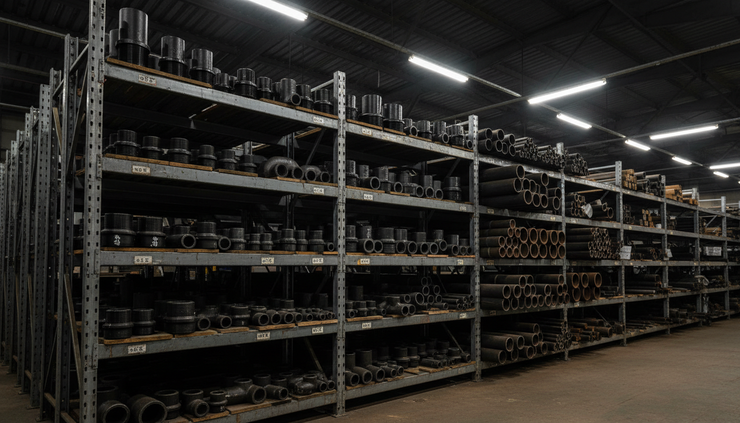
Common mistakes to avoid when selecting reduced bends
A reduced bend is useful, but it must be used with care. A few common mistakes can lead to leaks, rework, or wasted materials.
Choosing by appearance only
Many threaded fittings look similar. A reduced bend may be confused with a standard 90 degree elbow, especially when viewed from one side.
Always check the size marks and product description.
Ignoring thread compatibility
If thread types differ, the joint may feel tight without sealing properly. This can also damage the threads.
Do not force mismatched fittings.
Using the fitting in the wrong service
A fitting suitable for one medium may not suit another. Black malleable iron threaded fittings may be common in certain services, but approval must still match the application.
Confirm before use in potable water, gas, steam, chemicals, or high-pressure systems.
Forgetting corrosion protection
The black finish is not a full answer to corrosion. Exposed fittings may need paint, wrapping, coating, or a different material choice.
This matters in humid and coastal areas.
Treating the reduced bend as a fix for poor design
A reduced bend can make a layout cleaner, but it should not cover up poor pipe sizing or bad routing. The pipe design still needs proper flow, support, access, and safety clearance.
Why reduced 90 degree bends are helpful in compact pipe layouts
Space is one of the main reasons this fitting is useful. In a tight plant room, workshop, service duct, or wall-mounted installation, every extra fitting adds length and complexity.
A separate elbow plus reducer may work, but it can create a longer assembly. That extra distance may clash with a wall, equipment casing, cable tray, or another pipe.
A reduced bend can help keep the arrangement compact.
It also reduces the number of threaded joints. Each threaded joint needs sealant, tightening, alignment, and testing. Reducing joint count can simplify the work, as long as the selected fitting is correct for the system.
This is why the fitting is common in practical pipework. It solves a real layout problem without making the installation complicated.
A simple checklist before you buy
Before placing an order, run through this quick checklist.
What to check | Why it matters |
Larger end size | Confirms the fitting connects to the main pipe or larger line |
Smaller end size | Confirms the reduction matches the continuing pipe |
Thread standard | Helps prevent poor sealing and damaged threads |
Pressure rating | Confirms the fitting suits the working conditions |
Temperature range | Helps avoid using the fitting outside its limit |
Medium compatibility | Confirms suitability for gas, oil, water, air, or other service |
Finish and protection | Helps plan painting, wrapping, or coating |
Quantity needed | Reduces site delays and emergency purchases |
Related fittings | Ensures elbows, sockets, unions, and valves match |
Delivery location | Helps plan nationwide supply and project timing |
This simple check can prevent most ordering errors.
Takeaway
A reduced 90 degree black steel threaded malleable iron fitting is a small component with a useful job. It changes pipe direction and pipe size in one fitting, which can save space, reduce joint count, and make threaded pipework cleaner.
The key is to choose it properly. Confirm both sizes, thread type, pressure rating, medium compatibility, and corrosion protection before using it. For sensitive services such as gas, fire protection, steam, or industrial process lines, follow the project specification and use qualified installers.
To compare available options and related fittings, start with the product links above and check the details on each item page before ordering.


Comments